How to Make Low-Lying Fog + Best Low-Lying Fog Machines (2026)
Regular fog rises. Here's how to make low-lying fog that creeps along the ground, using a low lying fog machine, a DIY fog chiller, or dry ice (safely).
By PeekBuys Editorial · October 1, 2026 · 10 min read
You bought a fog machine, pointed it at the graveyard, and watched the fog float straight up past the tombstones and into the trees. That's normal. A standard fogger makes warm fog, and warm fog rises. To get the thick, creeping graveyard fog you see in haunted attractions, you need a low lying fog machine, a fog chiller, or dry ice.
In short: low-lying fog is fog that has been cooled until it's denser than the surrounding air, so it sinks and rolls along the ground instead of rising. You can make it three ways: buy a dedicated low-lying fogger, build a DIY ice chiller for the fog machine you already own, or drop dry ice into warm water.
This guide covers how to make low lying fog with each method, which fog juice to use, the weather that makes or breaks the effect, and how to fix fog that won't stay down.
Why regular fog machine fog rises
Regular fog rises because it comes out hot. According to the Wikipedia overview of fog machines, a standard machine pumps a glycol or glycerin and water mixture into a heat exchanger, where it's vaporized. The plume leaves the nozzle warmer than the air around it, so it's buoyant and drifts upward as it cools.
Low-lying fog flips that. The fog is chilled (by ice, a refrigeration unit, or the cold of dry ice) so it's colder and heavier than the air. It hugs the ground until it warms up or gets stirred, then rises and fades. Every method below is just a different way to make the fog colder than the air it's sitting in.
The 3 ways to make low-lying fog, compared
| Method | How it works | Effort | Run time | Best for | |---|---|---|---|---| | Low lying fog machine | Built-in ice chiller or ultrasonic mist | Low | Long, refill ice or water | Haunts, parties, repeat use every year | | DIY fog chiller | Your fog machine blows through a cooler of ice | Medium (1-2 hr build) | Long, top up ice | Budget yard haunts, existing fog machine owners | | Dry ice + warm water | Dry ice sublimates into cold CO2 fog | Low setup, constant tending | Short bursts, refill often | Cauldrons, photos, one-night effects |
The bottom line: if you already own a fog machine, a DIY chiller is the cheapest way to get ground fog. If you want plug-and-play fog year after year, buy a dedicated low lying fog machine. Use dry ice for small, dramatic spots, not for a whole yard all night.
Method 1: Use a low lying fog machine
A low lying fog machine is a fogger designed to output fog that stays near the ground, usually by chilling it with ice or by producing cool, heavy water-based mist. It's the easiest route: fill it, plug it in, and the fog comes out already low.
Real models worth knowing:
- ADJ Mister Kool II is the classic home-haunter pick. Per ADJ's product page, it uses standard water-based fog juice plus ice cubes in a built-in chiller box, has a 700W heater with about a 3-minute warm-up, and comes with a 12-foot wired remote and a drain valve for meltwater. Some retailers list it as discontinued, but it's still widely sold.
- Chauvet DJ Cumulus skips ice entirely. Chauvet DJ says it uses ultrasonic vibration to turn distilled water (plus optional fog fluid) into a heavy mist that hugs the floor. It's a bigger investment aimed at long events.
- Chauvet DJ Nimbus is a dry ice fog machine: a heated water tank (4.5 gallons) that you drop up to 10 lbs of dry ice into. It makes the densest, whitest floor fog, but needs 30-50 minutes to heat and runs about 6 minutes per load.
- Chauvet Professional Cloud 9 is the touring-grade version (a 121-lb rolling unit). It's overkill for a front yard, but it shows what pro venues use.
The trade-off is price. Dedicated low-lying foggers cost several times more than a basic fogger, which is why most home haunters build a chiller instead.
Method 2: Build a DIY fog chiller (step by step)
A fog chiller is an insulated box of ice that your fog machine blows through. The fog loses heat on the way, and it exits cold enough to creep along the ground. Builds like this Instructables fog chiller take an afternoon and use parts from any hardware store.
What you need:
- A large hard-sided picnic cooler (plastic bins and trash cans work but leak more cold)
- Two 2-inch PVC elbows or hub adapters, plus 2-inch PVC pipe or flexible dryer vent hose
- Waterproof silicone caulk
- A drill with a hole saw sized to your pipe
- 10-20 lbs of ice per session
- Your existing fog machine
Steps:
- Cut the inlet. Drill a hole near the top of one short end of the cooler for the fog to enter.
- Cut the outlet. Drill a second hole low on the opposite end, so fog travels the full length of the cooler.
- Build the cold path. Run PVC pipe drilled with holes, or a length of dryer hose, between the two openings so fog snakes through the ice instead of blasting straight across. More surface contact equals colder fog.
- Seal everything. Caulk around both fittings. Fog leaking from gaps is warm fog that will rise.
- Add ice. Fill the cooler around the pipe or hose with ice. Bagged cubes work. A block of ice lasts longer, and a few frozen water jugs stay cleaner.
- Position the fog machine. Point the nozzle at the inlet with a 3-4 inch gap. Don't jam the nozzle into the pipe: it needs air, and the heat can soften plastic.
- Close and tape the lid. Run the fog machine in short bursts on a timer or remote.
- Drain meltwater. Use the cooler's drain plug between sessions so fog isn't pushing through water.
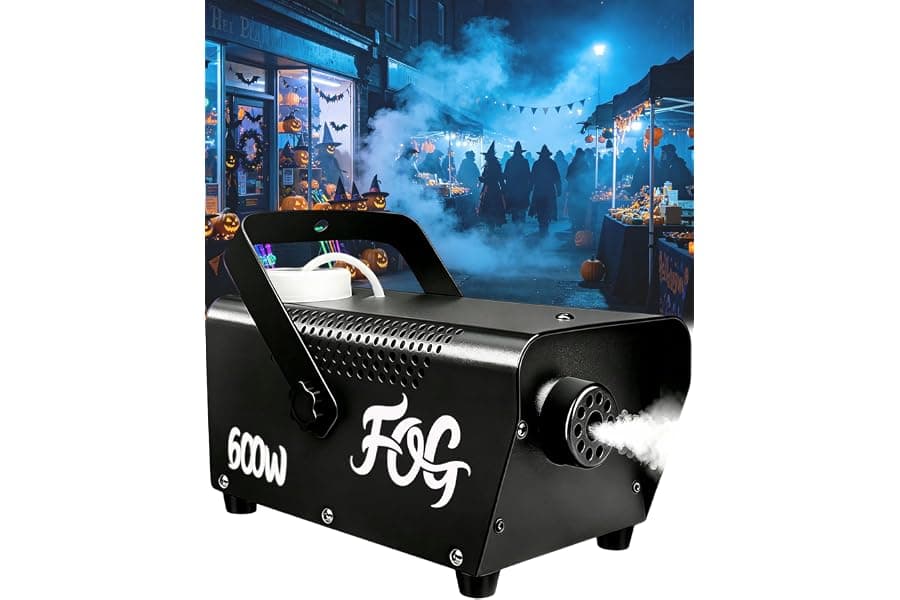
Feed it with a mid-size fogger like the two below. Any basic machine works with a chiller; for help picking one, see our guide to the best fog machines for Halloween.
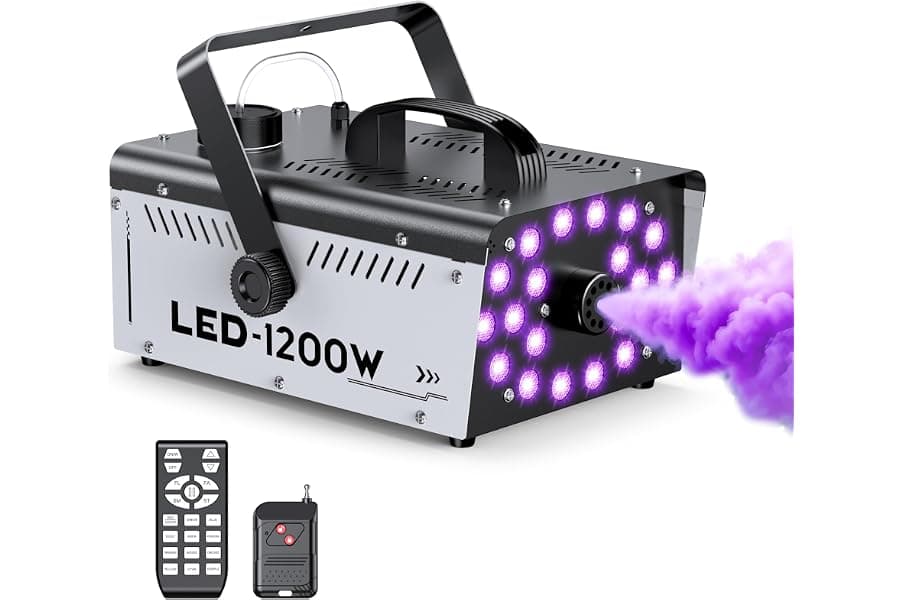
A larger 1200W unit pushes more fog per burst, which helps when your chiller output has to cover a long walkway or a big yard.
Method 3: Dry ice in warm water (and how to do it safely)
Dry ice fog is the most dramatic ground fog you can make, and the most hands-on. Dry ice is frozen carbon dioxide at about -109°F. Drop it in warm water and it sublimates fast, creating a thick white cloud of cold CO2 and water vapor that pours over edges and spreads along the floor.
How to do it:
- Fill a heat-safe bucket, cauldron, or tub with hot tap water (hotter water = more fog, but the dry ice runs out faster).
- Wearing insulated gloves, add a few chunks of dry ice with tongs.
- Replace the hot water as it cools and add more dry ice as it's used up.
How much to buy: Dry Ice Info suggests 5-10 lbs per 15 minutes in 4-8 gallons of hot water for big effects, or roughly 5-10 lbs total for a single cauldron through an evening. A yard display can go through 10-20 lbs per hour. Buy it the day of the event, since it sublimates even in a cooler.
Dry ice safety rules
Dry ice is safe when you respect it and dangerous when you don't. Based on guidance from the New York State Department of Health and industrial gas supplier safety sheets:
- Never touch it bare-handed. At -109°F it causes frostbite in seconds. Use insulated gloves and tongs.
- Never seal it in a container. One pound turns into roughly 250 liters of CO2 gas. A sealed bottle, cooler with a locked lid, or jar can burst violently.
- Ventilate, especially low areas. CO2 is heavier than air and pools near the floor, in basements, stairwells, and sunken patios. Don't use dry ice fog in small closed rooms.
- Keep kids and pets away. Small children and pets breathe at fog level, where CO2 concentrates. Never let anyone lie down in dry ice fog, and never let a child handle or taste it.
- Never put it in drinks or mouths. Swallowing a piece can cause serious internal injury.
- Transport it with a window cracked and don't store it in a closed car.
Choosing fog juice for ground fog
Use a fluid made for low-lying effects, not a long-hang formula. Long-lasting fluids are designed to stay suspended in the air for hours, which is the opposite of what you want on the ground.
- Froggy's Fog Freezin Fog is a water-based, glycerin-free fluid that Froggy's Fog designs specifically for chillers and outdoor graveyard fog.
- Froggy's Fog Cryofreeze is a high-density, short-hang fluid for indoor low-fog machines.
- General-purpose water-based juice still works through a chiller, just with thinner, shorter-lived ground fog. Check your machine's manual for which fluid types it accepts.
If you also run a regular fogger for atmosphere (lighting beams, haze over the porch), a big jug of standard fluid covers that side of the setup:
The weather that makes or breaks low-lying fog
The best night for ground fog is still, humid, and noticeably cooler than your chilled fog. Wind is the biggest enemy: even a light breeze shreds the fog and mixes it into the air.
- Still air: check the forecast and pick the calmest window of the evening, often right after sunset. Block gusts with props, hedges, fencing, or clear plastic sheeting around your scene.
- Humidity: damp air helps fog last. Many haunters lightly water the lawn an hour before dark.
- Temperature difference: fog stays low only while it's colder than the air around it. On warm nights a chiller matters most; push fog in short bursts so it stays cold.
- Ground shape: fog flows downhill like water. Put the outlet at the high point of the yard and let it roll toward the sidewalk, or contain it in a low spot.
Indoor vs. outdoor low-lying fog
Outdoors, you're fighting wind and fast warming, so you need more output and more ice. Indoors, low-lying fog lasts much longer because the air is still, but you'll trade that for other limits:
- Smoke detectors: heavy fog can trigger some detectors. Test in advance and never disable them.
- Floors: water-based fog and chiller meltwater can leave floors slick. Put a mat under the chiller and avoid fogging staircases.
- Ventilation: absolutely required for dry ice; recommended for any fog in a small room.
For a full haunted yard, pair ground fog with lighting so it actually shows up in the dark. Our Halloween projector guide covers lights that make fog glow, and animated Halloween decorations give the fog something to creep around.
Troubleshooting: fog rising, too thin, or wet
Most low-lying fog problems come down to fog that isn't cold enough, isn't dense enough, or is being disturbed.
| Problem | Likely cause | Fix | |---|---|---| | Fog rises out of the chiller | Not cold enough, or leaking around the lid | Add more ice, lengthen the cold path, seal gaps, run shorter bursts | | Fog is thin and wispy | Long-hang or diluted fluid, small machine | Switch to a low-lying fluid like Freezin Fog; use a higher-output fogger | | Fog vanishes in seconds | Wind or dry air | Add windbreaks, wet the ground, fog closer to the scene | | Puddles and drips at the outlet | Condensation and meltwater | Drain the cooler, tilt the outlet down, put a tray or mat underneath | | Machine sputters | Fluid tank low, or nozzle choked by the chiller inlet | Refill, and leave a 3-4 inch gap at the inlet |
Frequently Asked Questions
Want more how-tos?
Get our latest product picks and guides delivered to your inbox.
You Might Also Like
Related Reads

Best Animated Halloween Decorations & Animatronics (2026)
The best animated Halloween decorations for 2026, from cheap motion-activated props to $300+ animatronics, plus how to pick triggers, power and weatherproofing.
Oct 1, 2026 · 8 min read
Best Fog Machine for Halloween (2026): Picks, Fog Juice & Tips
How to pick a fog machine for Halloween: wattage vs CFM, heat-up time, timers, fog juice that won't wreck your machine, fog vs haze, and our picks by yard size.
Oct 1, 2026 · 9 min read

Best Halloween Window Projector & Outdoor Picks (2026)
How a Halloween window projector works, which hologram kits, outdoor projectors and laser lights are worth buying, and a step-by-step setup that actually looks scary.
Oct 1, 2026 · 9 min read