Best Fog Machine for Halloween (2026): Picks, Fog Juice & Tips
How to pick a fog machine for Halloween: wattage vs CFM, heat-up time, timers, fog juice that won't wreck your machine, fog vs haze, and our picks by yard size.
By PeekBuys Editorial · October 1, 2026 · 9 min read
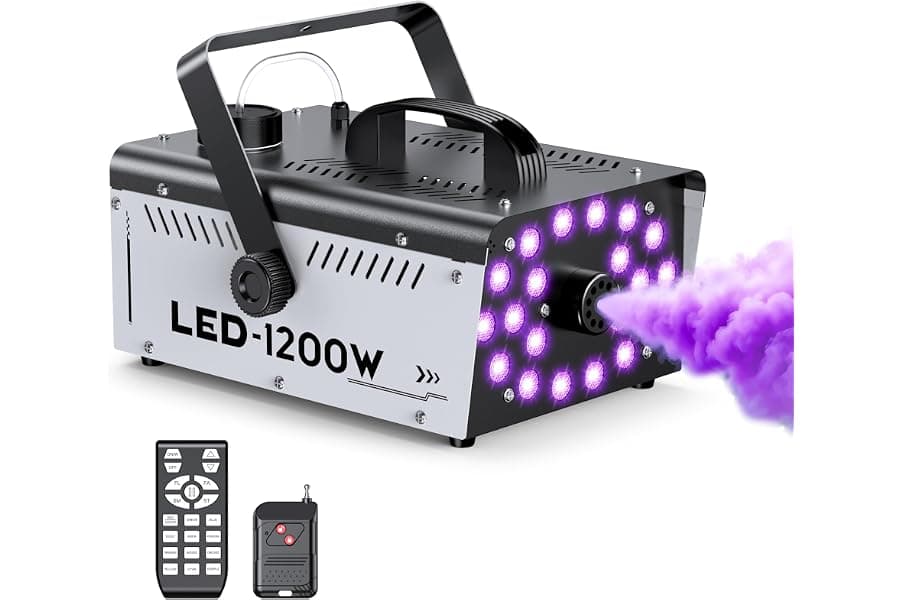
A fog machine for Halloween is the cheapest way to make an ordinary porch look haunted. The short answer: a 400-700W machine with a remote is plenty for a doorway or small porch, while a 1,000-1,500W machine with a timer is the better buy for a front yard or a walk-through haunt. Pair either with a quality water-based fog juice and you're set.
The tricky part is that box specs don't tell the whole story. Below we explain which numbers matter, which fog juice to buy, how fog differs from haze, and how to run a fogger outdoors without filling the street, setting off the smoke alarm, or upsetting the dog.
How a fog machine works (and why it pauses)
A fog machine is a heater with a pump. It pushes water-based fluid, a mix of water with glycol and/or glycerin, through a heated block called a heat exchanger, which flash-vaporizes it into a dense white cloud (SurgeFX).
That design explains the most common complaint: the fog stops after a few seconds. Every burst cools the block, so the machine has to reheat before the next one. That's normal behavior, not a defect. Higher-wattage machines simply recover faster.
What to look for in a fog machine for Halloween
In short: buy on wattage, heat-up time, tank size, and controls. Treat the advertised CFM number as a rough hint only.
| Spec | What it means | What to look for | |---|---|---| | Wattage | Heater power; drives output and recovery time | 400-700W for a porch, 1,000-1,500W for a yard or haunt | | CFM (cubic feet per minute) | Advertised fog volume | Not standardized; compare within a brand, not across brands | | Heat-up time | Minutes before first fog | Name-brand units list about 2-3 minutes; budget units often run longer | | Tank size | Fluid capacity | 1L or more means fewer refills during trick-or-treat hours | | Remote | Fog on demand from a distance | Wireless is easier to hide behind a prop | | Timer | Automatic bursts at set intervals | The single most useful feature for an unattended display |
CFM is the spec to be most skeptical about. There's no common test method, so a no-name 1,500W machine may advertise "20,000 CFM," while Chauvet rates its Hurricane 1000 at 10,000 CFM and its smaller Hurricane 700 at 1,500 CFM (B&H, Sweetwater). Wattage is the more honest comparison.
A timer beats a remote for most homes. You set burst length and interval once, and the yard stays foggy while you hand out candy. Many budget machines include a timer remote; Chauvet sells one separately, the Chauvet FC-T timer remote.
Best fog machines for Halloween, by use case
The best fog machine is the one sized to your space, and the best Halloween fog machine for most homes is a 1,000-1,200W model with a timer. These picks are grouped by job, not ranked by a single score.
Best for a porch or doorway: a 500-600W remote fogger
For a front door, a covered porch, or a bowl-of-candy station, a small fogger with a remote is all you need. Small machines heat up, put out a few seconds of fog, then pause to recover, which suits a "push the button when kids walk up" setup.
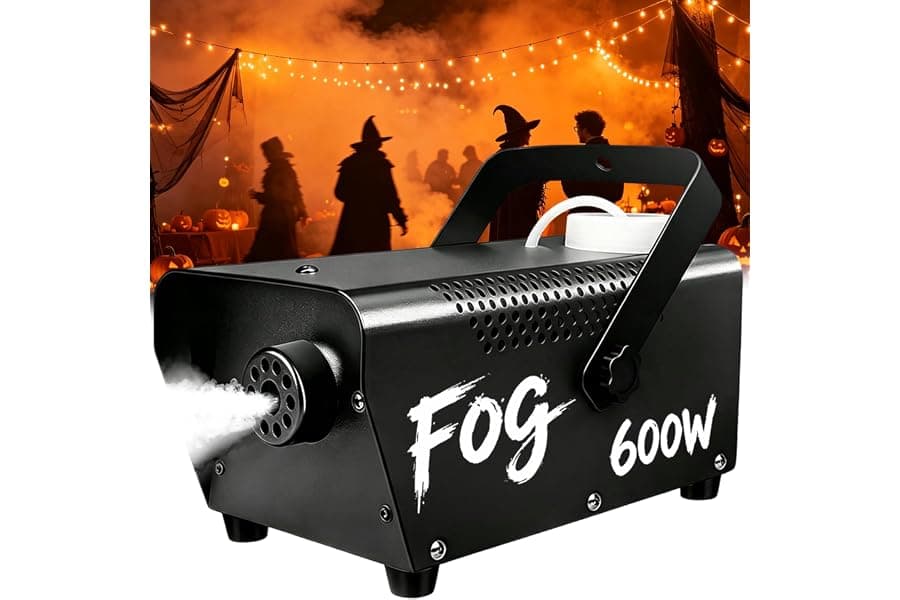
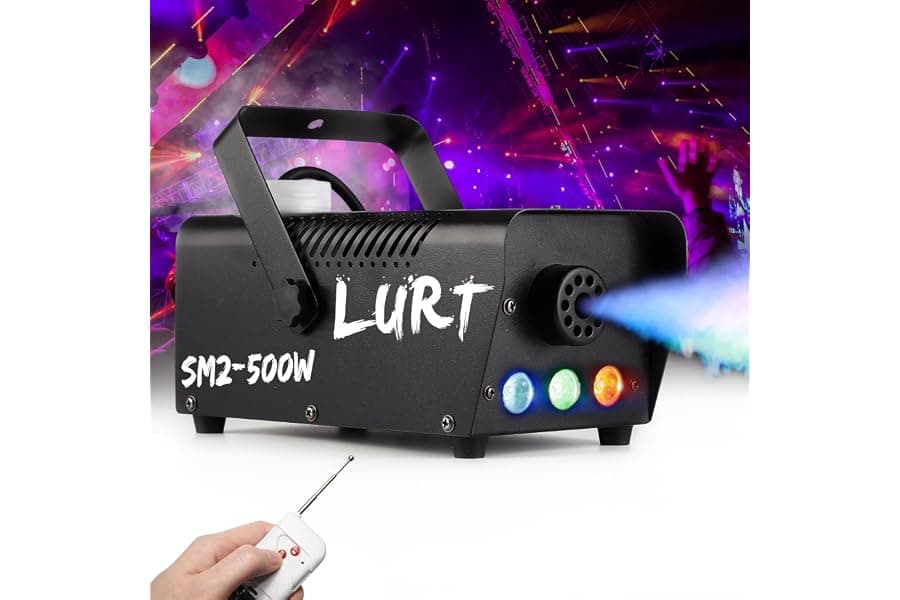
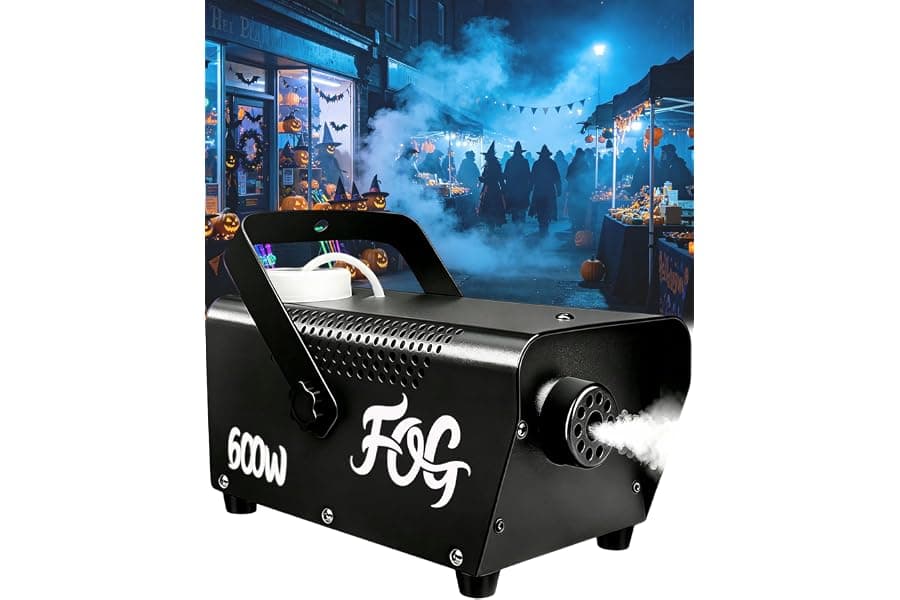
This 600W unit comes with both wired and wireless remotes. If you want something even smaller to tuck inside a prop, the LURT 500W mini is a compact alternative.
Best for a front yard: a 1,200W fogger with a timer
At 1,000W and up, recovery time drops and you can keep a yard covered with timed bursts. That's the sweet spot for most Halloween yard displays.
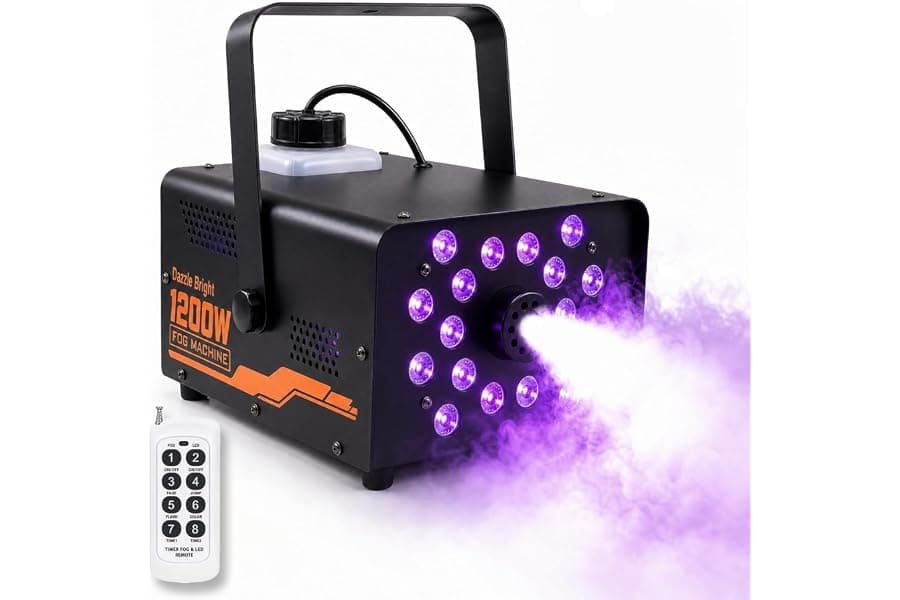
The Dazzle Bright 1200W lists a built-in timer and wireless remote, with colored LEDs for tinting the fog. The Dviuoa 1200W is a similar step-up, with a 1L tank and a long-range wireless remote listed at up to 98 feet, useful when the machine is buried in a graveyard scene.
Best for a walk-through haunt or big yard: a 1,500W machine
If you're running a garage haunt or a large open yard, a 1,500W machine with a 2L tank means fewer refills and stronger output against the breeze. Ignore the "20,000 CFM" claim on the listing and buy it for the wattage and tank size.
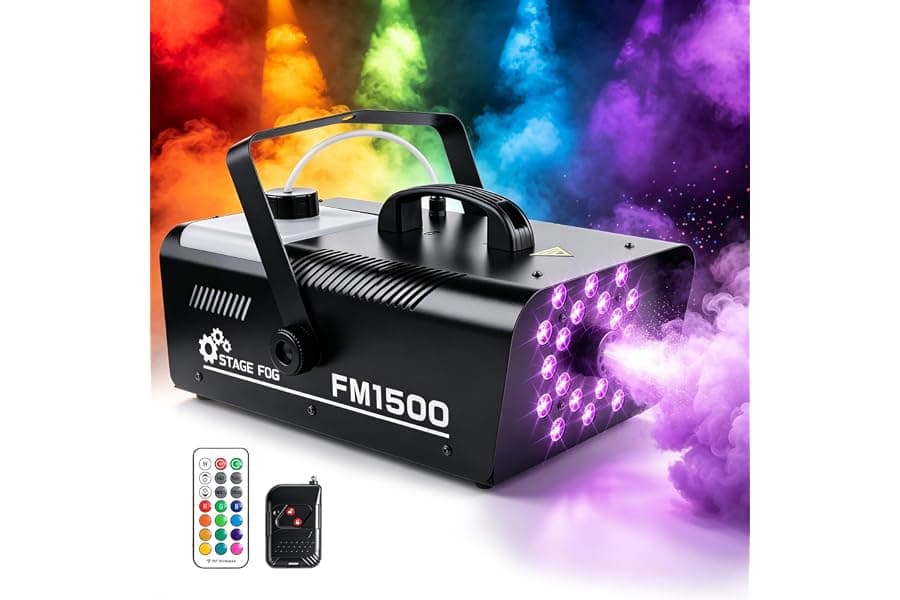
Best name-brand option
If you'd rather buy from an established lighting brand with published specs, the Chauvet DJ Hurricane 1000 is a long-running favorite. Chauvet lists a 2-minute heat-up, 20 ml/min fluid use, and both wired and wireless remotes in the box. The smaller Chauvet DJ Hurricane 700 suits a porch, with a 2.5-minute heat-up and a 0.6L tank.
Fog juice: what to buy and what never to use
Fog juice is the water-based fluid a fog machine vaporizes, made from deionized water plus glycol, glycerin, or both. The blend controls how the fog looks:
- Glycol-heavy fluids make fog that clears faster, which is good for jump-scare bursts.
- Glycerin-heavy "high density" fluids make thicker fog that hangs longer, which is better outdoors and for photos (Alliance Chemical).
- Brand-specific lines label this for you. Froggy's Fog, for example, sells fast-dissipating, long-hang (like Froggy's Fog Swamp Juice), and low-lying formulas.
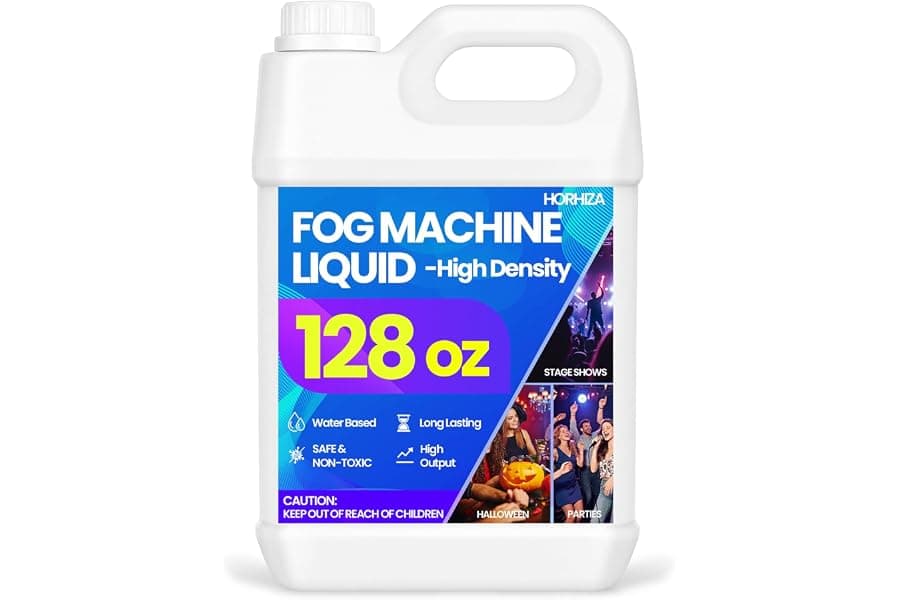
How long does a gallon last? Chauvet lists fluid use at 7.5 ml/min for the Hurricane 700 and 20 ml/min for the Hurricane 1000. A gallon (about 3,785 ml) works out to roughly 8 hours and 3 hours of continuous fogging. On a timer, with pauses between bursts, a gallon typically covers a full Halloween night. A concentrate stretches the budget further:
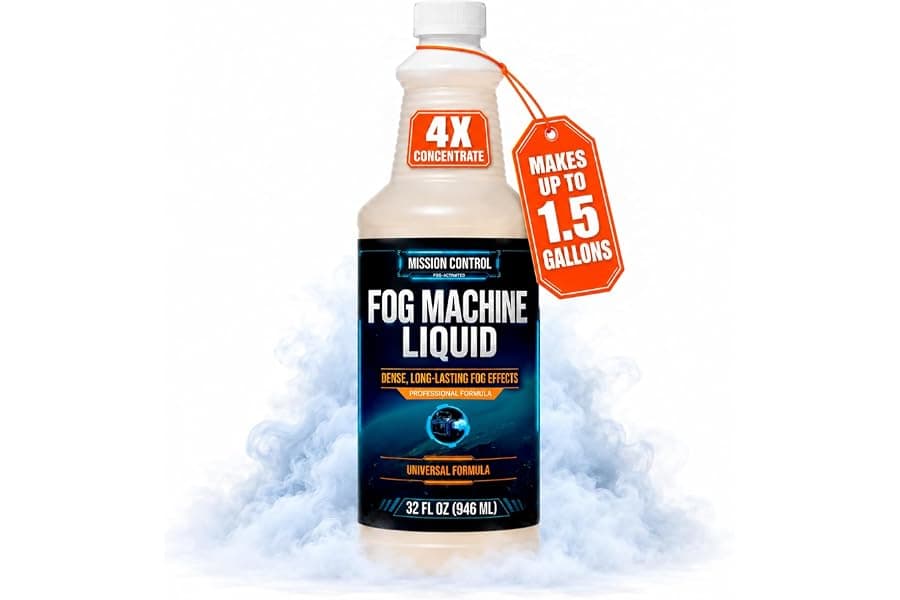
Never use DIY substitutes. Skip homemade glycerin mixes, scented oils, and haze fluid. Fog-fluid makers warn that off-spec liquids can damage the heat exchanger, pump, and nozzle, usually void the warranty, and can create harmful byproducts when overheated (StageSpot). For the safest choice, buy a fluid made for water-based foggers in your machine's wattage range.
Fog machine vs hazer: which do you need?
For Halloween, you almost certainly want a fog machine. A fog machine makes thick, visible clouds that roll and then dissipate within minutes. A hazer makes much finer particles (around one micron) that spread into an even, barely visible atmosphere and linger far longer (Wikipedia).
Haze is what makes laser and spotlight beams visible at concerts. It's great for indoor light shows, but outdoors it blows away, and oil-based haze can leave a residue film. If your display leans on lasers or projection, a little fog does a similar job for beam effects. See our guide to the best Halloween projectors for pairing ideas. Never swap fluids between the two machine types.
How to set up a fog machine outdoors
Wind is the biggest enemy of outdoor fog. A few placement rules make a huge difference:
- Work with the wind. Place the machine upwind so the breeze carries fog across your display, not into the street.
- Hide it low and close. Tuck the fogger behind a tombstone, inside a cauldron, or under a bush. Fog looks best when it seems to come from the scene itself.
- Light it from below or behind. Fog is invisible in the dark without light. A colored spotlight, uplight, or projector beam turns a gray cloud into a green swamp mist.
- Use a timer at short intervals. Several short bursts read better than one long blast and keep the machine from cooling down.
- Keep it dry and level. Most consumer foggers aren't weatherproof. Shelter the machine from rain and run it on an outdoor-rated extension cord.
Fog also makes motion props more dramatic. A burst timed with a lunging skeleton is classic haunt staging, and our roundup of animated Halloween decorations has props that pair well with it.
Fog machine safety: alarms, breathing, and pets
The bottom line: a fog machine for Halloween is safe for most homes when you ventilate, keep the nozzle clear, and keep sensitive people and pets out of the thickest fog.
- Smoke alarms: Fog regularly trips smoke detectors, especially photoelectric (optical) types (UKing). Indoors, keep fog away from detectors and use short bursts. Never disable a smoke alarm; if you cover one for an event, uncover it immediately after.
- Breathing: Heavy exposure can irritate eyes and throats, and fog can bother people with asthma (Wikipedia). Professional venues follow the ANSI E1.5 theatrical fog standard and its exposure limits (ESTA). At home, the practical rule is to ventilate indoors and keep fog light.
- Pets: Fog settles low, right at a dog's or cat's nose level. Keep pets inside and away from the fogged area. If your dog is joining the fun in costume, see our dog Halloween costumes guide, and keep pet birds in a closed room far from any fog.
- Hot nozzle and slick floors: The nozzle gets hot enough to burn, so keep it away from kids, costumes, and decorations. Fog residue can make hard floors slippery indoors.
What about low-lying fog?
Regular fog rises and drifts. The creeping, ankle-high graveyard fog people picture comes from chilling the fog, either with a dedicated low-lying fog machine, an add-on chiller filled with ice, or dry ice. It's a different setup with its own gear, so we cover it fully in our guide on how to make low-lying fog.
What to do next
- Measure your space: porch (500-700W) or yard and haunt (1,000-1,500W).
- Prioritize a timer and a 1L-plus tank for unattended displays.
- Buy a gallon of water-based fog juice matched to your machine's wattage.
- Test your fog machine for Halloween a few nights early so you can tune placement and timer settings.
Related reading: Best Halloween projectors · Best animated Halloween decorations · Best pumpkin carving tools · More outdoor picks
Frequently Asked Questions
Want more buying guides?
Get our latest product picks and guides delivered to your inbox.
You Might Also Like
Related Reads
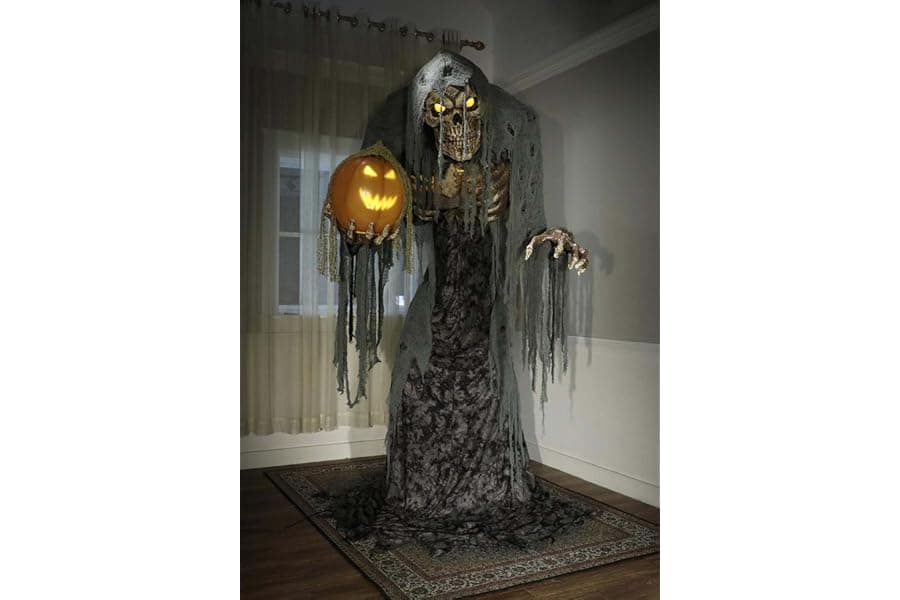
Best Animated Halloween Decorations & Animatronics (2026)
The best animated Halloween decorations for 2026, from cheap motion-activated props to $300+ animatronics, plus how to pick triggers, power and weatherproofing.
Oct 1, 2026 · 8 min read

Best Halloween Window Projector & Outdoor Picks (2026)
How a Halloween window projector works, which hologram kits, outdoor projectors and laser lights are worth buying, and a step-by-step setup that actually looks scary.
Oct 1, 2026 · 9 min read
How to Make Low-Lying Fog + Best Low-Lying Fog Machines (2026)
Regular fog rises. Here's how to make low-lying fog that creeps along the ground, using a low lying fog machine, a DIY fog chiller, or dry ice (safely).
Oct 1, 2026 · 10 min read